The Po: Spirit of the Lungs
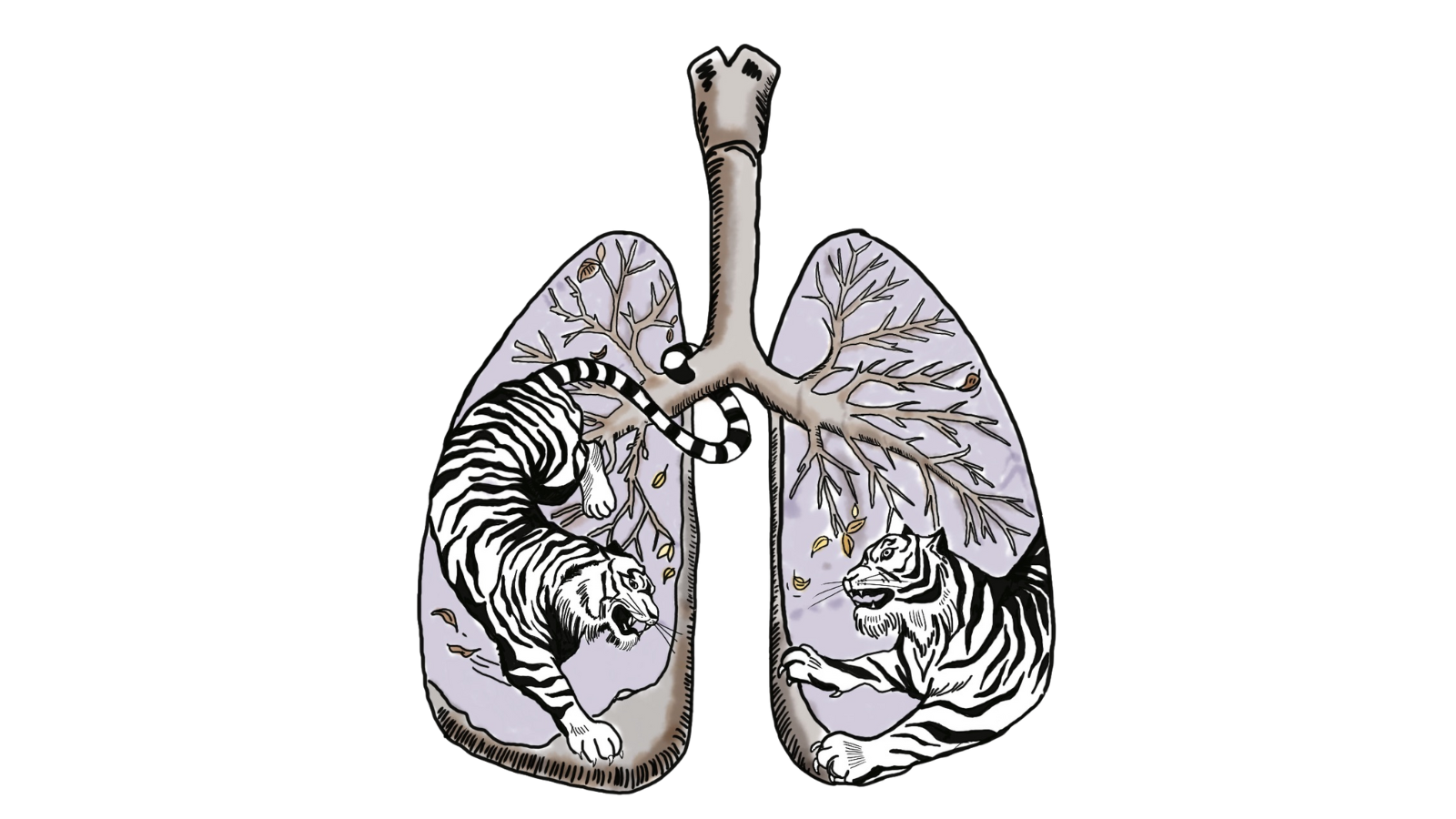
The animal soul
The Po is the spirit of the lungs, large intestine, and skin, related to the Metal element. It rules our animal body and governs our most primal instincts and automatic responses: breathing, digesting, surviving.
The Po enters the body through the lungs upon our first breath and leaves out the anus upon death. The Po is not “ours” but is borrowed from the Earth to help us survive and live in a mortal world.
The white tiger
The spirit animal of the lungs is the White Tiger of the West — fierce, instinctual, and protective. The Tiger governs wei qi, the body’s defensive energy that protects against external invasion.
The wei qi supports the immune system and helps us maintain healthy emotional and spiritual boundaries. The Tiger’s power is strongest when we are acting from a place of integrity and virtue.
Holding on to life
The Po anchors us to life through its impulse to attach. Just as the lungs attach to the particles in the air we need to survive, the Po attaches to the people, places, and things we need for our physical and emotional wellbeing. This instinct can be seen in a baby latching to their mother’s breast — the body’s first movement toward nourishment and safety.
When the Po is balanced, attachment feels natural and supportive; when disturbed, it can become anxious or avoidant.
Letting go of life
The Po helps us flow with life — to hold on when we need to, and to release when it’s time. The White Tiger walks us to the edge where life meets death, to the place where we learn to let go — of people, places, and things we’ve loved, and of experiences that no longer serve our growth.
Holding on too tightly is a sign the Po needs attention. Just like our lungs a healthy Po is flexible — it can hold on, and when the time is right, it can let go. It can let go.
Demons and ghosts
The Po stores the memory of past trauma in the body and forms survival patterns to keep us safe. Over time, these patterns can harden into habits such as addiction, avoidance, or chronic tension. When old pain is not met with awareness and care, it can stagnate and create disturbance in the body or spirit.
In Chinese medicine, these unresolved energies are sometimes called gui — ghosts that can linger in the body and, in some teachings, continue after death until they are given presence and release.
Caring for your Po
Shake, dance, or move your body freely — to connect with your animal body and attune to the autonomic nervous system.
Use aromatherapy or incense. The lungs open at the nose; scent directly nourishes the Po.
Connect to your breath throughout the day — notice its texture, rhythm, and depth.
Care for your body as you would a sensitive animal: listen before acting, move slowly, and offer safety and warmth.
Tell the truth. Stay in integrity. The Po strengthens when what you say, feel, and do are aligned.
Interested in Learning More?
Join my Practice Path Membership — an ongoing space to deepen your Qigong, connect with others, and grow in rhythm with the seasons.
Two related classes in the Practice Path Library:
The Tiger
The Tiger Jumps on His Prey
Any classes about the lungs are also relevant!